Fall in the Swiss Alps can be beautiful, but mountain weather does not care whether an outfit looked good in the hotel mirror.
Temperatures can change with elevation, wind can make mild conditions feel colder, and a dry morning can turn into a damp afternoon.
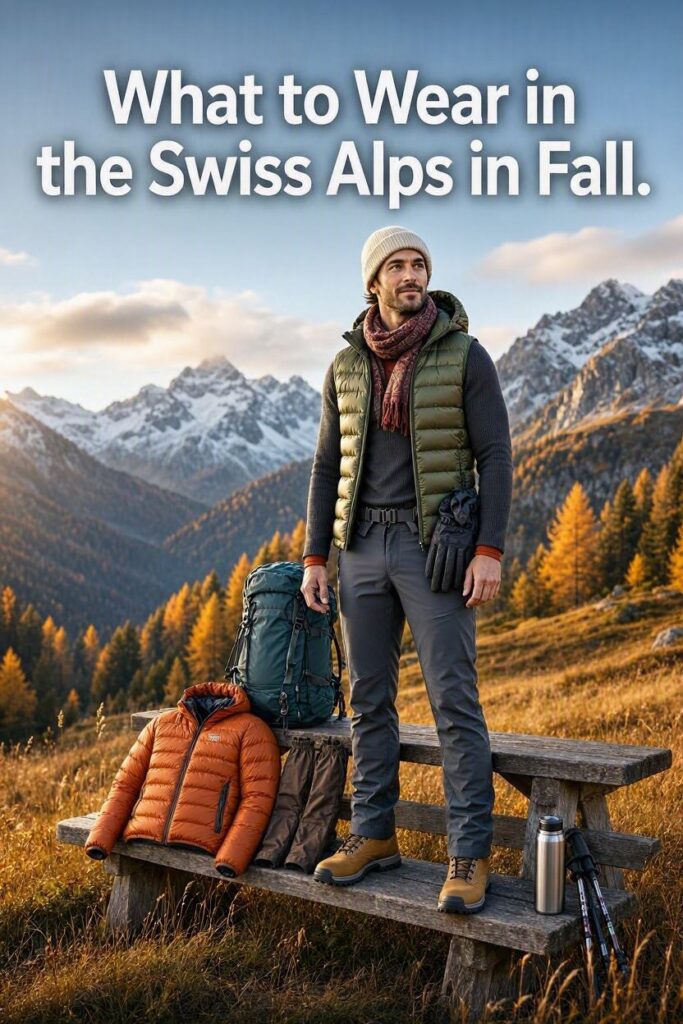
For men, the best Swiss Alps fall outfits combine practical performance with simple, rugged style.
The goal is not to dress like a professional mountaineer for every outing.
The goal is to match the clothing to the activity.
Walking around Zermatt requires something different from hiking a mountain trail.
The Three-Level Alpine Dressing System
Before choosing an outfit, identify the day.
Level 1: Mountain town
City-style clothing with warmer layers is usually enough.
Level 2: Scenic excursion
More weather protection and better footwear are needed.
Level 3: Hiking
Prioritize technical fabrics, traction and moisture management.
This simple system prevents overpacking.
Outfit 1: Mountain Town Casual
Wear:
- Dark jeans
- Merino sweater
- Flannel or overshirt
- Insulated jacket
- Leather boots
This works for restaurants, village walks and casual sightseeing.
The downside of heavy leather boots is weight.
If walking all day, a lighter hiking-inspired boot may be more comfortable.
Outfit 2: Smart Alpine Look
Try:
Dark chinos + fine knit + wool overshirt + weather-resistant jacket + boots
This looks refined but still suits cooler mountain air.
Avoid wearing thick wool trousers during active excursions. They may feel warm and can become uncomfortable if damp.
Save heavier tailoring for relaxed days.
Outfit 3: Scenic Train or Cable Car Day
Wear:
T-shirt or base layer + merino sweater + lightweight insulated jacket + comfortable trousers + walking shoes
The layers can be adjusted easily.
This matters because the temperature inside transport can feel much warmer than outdoors.
Outfit 4: Fall Hiking Outfit
For hiking:
- Moisture-managing base layer
- Fleece or merino mid-layer
- Windproof or waterproof shell
- Hiking trousers
- Wool-blend socks
- Hiking boots or trail shoes
Cotton is comfortable in ordinary conditions, but for active mountain hiking it can hold moisture and dry slowly.
That becomes more uncomfortable when temperatures drop.
Why the Base Layer Matters
The base layer should manage moisture.
A quality synthetic or merino layer can help move moisture away from the skin.
Merino is useful for multi-day trips because it tends to resist odor.
However, lightweight merino can wear faster under backpack straps.
For a backpack-heavy trip, a tougher blend may last better.
Outfit 5: Rugged Fall Style
Try:
Dark utility trousers + henley shirt + flannel overshirt + quilted jacket + hiking-inspired boots
This works well for mountain towns and road trips.
Keep the colors natural:
- Olive
- Brown
- Charcoal
- Navy
- Burgundy
- Dark denim
Outfit 6: Rainy Alpine Day
Wear:
Base layer + fleece + waterproof shell + quick-drying trousers + waterproof boots
Avoid relying on denim.
Wet denim becomes heavy and takes a long time to dry.
This is one of the biggest differences between mountain fashion and city fashion.
Outfit 7: Cold Morning, Warm Afternoon
Use:
Light base + zip-up fleece + packable insulated jacket
The zip layer is useful because it allows ventilation without removing the entire garment.
A pullover sweater looks great, but it is less adjustable during active movement.
Advanced Layering Rule: Avoid Two Waterproof Layers
Some people wear a waterproof jacket over another heavily coated waterproof layer.
That can reduce breathability and trap heat.
Instead, use:
Breathable base + insulating layer + one weatherproof shell
Each layer should have a specific job.
Advanced Fabric Rule: Watch Backpack Friction
Shoulders and lower backs experience repeated friction from backpacks.
Soft knitwear and delicate fabrics can pill quickly.
For hiking days, choose tougher outer fabrics.
Save delicate merino and cashmere for evenings and town walks.
Best Pants for the Swiss Alps
Jeans
Good for casual town days.
Poor when wet or during demanding hikes.
Hiking trousers
Best for active outdoor days.
Some can look overly technical.
Stretch chinos
Excellent for travel and light sightseeing.
Less useful in heavy rain.
Softshell trousers
Useful in wind and variable weather.
Can become warm during intense activity.
Footwear Guide
| Activity | Best Footwear |
|---|---|
| Mountain town | Leather boots |
| Scenic walking | Supportive walking shoes |
| Light trails | Trail shoes |
| Hiking | Hiking boots or appropriate trail footwear |
| Rain | Waterproof footwear with grip |
Do not wear new hiking boots on the first major hike of the trip.
Break them in beforehand.
Blisters can ruin several days.
What Men Should Avoid Wearing
Avoid:
- Cotton-heavy outfits for active hikes
- Fashion sneakers with poor grip
- Heavy denim in persistent rain
- One giant sweater with no removable layers
- Delicate fabrics under backpack straps
- New, untested boots
A Simple Alpine Packing Formula
Pack:
- 2 base layers
- 2 mid-layers
- 1 insulated jacket
- 1 weatherproof shell
- 2 trousers
- 1 casual pair of jeans
- 1 pair outdoor shoes
- 1 pair casual boots
- Warm socks
- Hat and gloves
The Final Alpine Check
Before leaving for the mountains, ask:
- Can this outfit handle wind?
- Can one layer be removed?
- Will the footwear grip wet surfaces?
- What happens if it rains?
- Is the fabric suitable for the activity?
If the answer to the last question is no, change the outfit.
Next step: separate your mountain clothing into town, sightseeing and hiking categories before packing. This stops the suitcase from filling with unnecessary technical gear.