A fall trip to the Swiss Alps can involve cafés, mountain trains, scenic viewpoints, village walks and proper hiking, sometimes all within the same holiday.
That means one outfit will not always work for everything.
A long wool coat may look beautiful in a mountain village but makes little sense on a wet hiking trail. Fashion sneakers may work for a train journey but offer poor grip on uneven ground.
The easiest solution is to build outfits around the activity.
The Women’s Swiss Alps Fall Formula
Use:
Base layer + warmth layer + weather layer + suitable bottom + appropriate footwear
The clothing does not have to look overly technical.
For village and sightseeing days, choose more refined pieces.
For hiking, switch to function-first clothing.
Outfit 1: Alpine Village Chic
Wear:
- Dark straight-leg jeans
- Cream merino sweater
- Quilted jacket
- Leather ankle boots
- Wool scarf
This works beautifully for mountain towns.
The cream sweater creates a classic Alpine look, while dark denim makes the outfit practical.
Avoid extremely oversized knitwear if wearing a backpack. Friction can cause pilling and the bulky shape may feel uncomfortable beneath straps.
Outfit 2: Cozy Cable Knit Look
Try:
Dark leggings or straight trousers + fitted base top + cable-knit sweater + insulated vest + boots
The fitted base layer keeps the outfit balanced.
A cable-knit sweater is warm and visually interesting, but it takes up significant suitcase space.
If packing light, one medium-weight merino sweater may be more useful than a very bulky knit.
Outfit 3: Scenic Mountain Excursion
For a cable car or train excursion:
Base top + merino sweater + lightweight insulated jacket + comfortable trousers + walking shoes
Add gloves and a hat if temperatures require them.
The advantage of an insulated jacket is that it can be removed and packed more easily than a heavy wool coat.
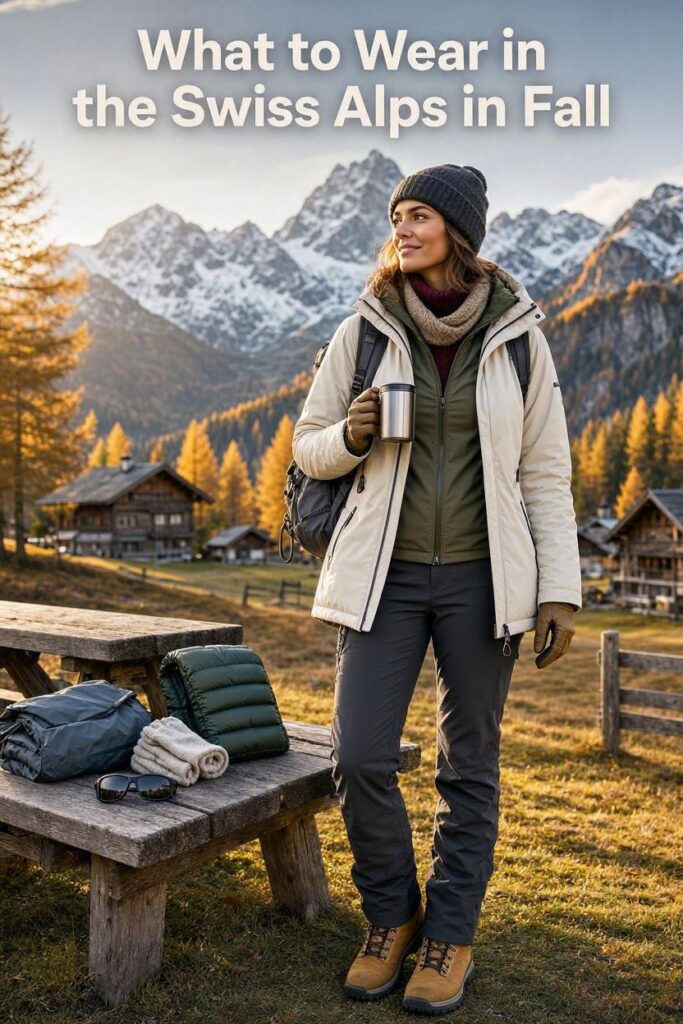
Outfit 4: Fall Hiking Outfit
For hiking, wear:
- Moisture-managing base layer
- Fleece or merino mid-layer
- Waterproof shell
- Hiking trousers or suitable leggings
- Wool-blend socks
- Hiking boots or trail shoes
This is where fashion should take a back seat.
Wet rocks and uneven paths are not the place for smooth-soled boots.
Outfit 5: Mountain Leggings Outfit
Leggings can work well for active days.
Try:
Performance leggings + long moisture-managing top + fleece + shell jacket + hiking shoes
For town use, add an oversized knit or structured jacket.
The key is fabric thickness.
Very thin fashion leggings may become cold and uncomfortable outdoors.
Look for a fabric suitable for the actual temperature and activity.
Outfit 6: Rainy Mountain Outfit
Wear:
Merino base + fleece + waterproof jacket + quick-drying trousers + waterproof footwear
Avoid long skirts, wide trousers and regular denim.
Wet fabric around the ankles can make an entire day uncomfortable.
Outfit 7: Mountain Chalet Outfit
For a relaxed evening:
Soft knit trousers + fitted top + cardigan + warm socks
Or:
Knit dress + tights + cardigan + ankle boots
A chalet outfit can be softer and less technical because the activity level is lower.
Outfit 8: The Alpine Vest Outfit
Try:
Long-sleeve base + fine sweater + insulated vest + straight trousers + boots
An insulated vest is particularly useful in fall because it warms the torso without adding bulk to the arms.
This makes it easier to move, especially when carrying bags.
Advanced Styling Rule: Protect the Core First
Warmth does not always require the thickest possible sleeves.
A warm vest combined with a flexible base and weatherproof outer layer can sometimes feel more comfortable than a single oversized insulated coat.
This is particularly useful during sightseeing.
Advanced Fabric Rule: Wool Is Not Automatically Weatherproof
Wool is naturally useful in cool conditions, but a wool sweater is not a rain jacket.
Once heavily saturated, wool becomes heavier and takes time to dry.
Always distinguish between an insulating layer and a weather layer.
They perform different jobs.
Outfit 9: Stylish Mountain Restaurant Look
For an evening:
Dark trousers + fitted knit + long cardigan or wool jacket + ankle boots
Or:
Midi knit dress + tights + boots
These outfits look polished without requiring a completely separate evening wardrobe.
Outfit 10: Autumn Color Palette
Natural colors work beautifully in the Alps:
- Cream
- Camel
- Chocolate brown
- Burgundy
- Forest green
- Navy
- Charcoal
- Dark denim
One useful approach is to choose a neutral base and one rich accent.
For example:
Charcoal trousers + cream knit + burgundy scarf
The scarf adds color without requiring an entirely separate wardrobe.
Best Bottoms for Alpine Fall
| Bottom | Best For | Limitation |
|---|---|---|
| Jeans | Village walks | Poor when wet |
| Leggings | Active days | Fashion versions may be thin |
| Hiking trousers | Hiking | Can look technical |
| Straight trousers | Travel/town | Less useful for trails |
| Softshell pants | Wind and outdoor activity | May feel warm indoors |
Best Footwear
For mountain villages:
- Leather ankle boots
- Supportive sneakers
For sightseeing:
- Walking shoes
- Trail-style sneakers
For hiking:
- Hiking boots
- Trail shoes suited to the route
Never choose shoes based only on how they look with the outfit.
The terrain gets the final vote.
What to Avoid
Avoid:
- Delicate cashmere under rough backpack straps
- Smooth-soled fashion boots for trails
- Cotton-heavy clothing for demanding hikes
- Heavy denim in rainy weather
- One thick sweater with no adjustable layers
- New hiking boots that have not been tested
The Alpine Women’s Packing Framework
Pack clothing in three groups:
Town: jeans, knitwear, boots, coat.
Excursion: comfortable trousers, layers, insulated jacket.
Hiking: moisture-managing clothing, shell, proper footwear.
Some items can overlap, but not everything should.
That distinction makes packing far easier.
Next step: plan every mountain day by activity first, then choose the outfit. Start with footwear, add the correct bottom, then build upward with layers.