Fall mountain outfits for women need to solve a simple problem, mountain weather can change faster than the outfit.
A sunny morning may feel warm while walking uphill, then suddenly become cold when stopping at a viewpoint. Wind, elevation and rain can change comfort levels quickly.
The smartest mountain outfit is not the warmest outfit.
It is the outfit that can adapt.
That means layers, moisture management and footwear with enough grip for the terrain.
The Five-Part Mountain Outfit Formula
Build from the ground up:
- Suitable footwear
- Functional bottom
- Moisture-managing base
- Warm mid-layer
- Weather layer
Starting with shoes is useful because footwear often determines what the rest of the outfit needs to do.
A mountain trail and a mountain village require different shoes.
Outfit 1: Classic Fall Hiking Look
Wear:
- Hiking boots
- Hiking trousers
- Merino or synthetic base layer
- Fleece
- Waterproof shell
This is practical and easy to adjust.
The fleece provides warmth, while the shell protects against wind and rain.
Avoid putting a heavy waterproof jacket directly over a thick sweater and calling it a layering system. The outfit can become hot and restrictive.
Each layer should have a purpose.
Outfit 2: Leggings and Fleece
Try:
Performance leggings + long-sleeve base + half-zip fleece + lightweight shell
This combination is good for active movement.
The half-zip design is particularly useful because it allows ventilation.
That is one reason zip layers can outperform pullovers during active mountain days.
Outfit 3: Stylish Mountain Village Look
For a less demanding day:
Dark straight jeans + fine knit + quilted jacket + ankle boots
Add a scarf.
This gives a mountain-inspired appearance without wearing full hiking gear.
Remember, fashion boots are fine for a village street but may not have enough traction for a muddy trail.
Outfit 4: Wide-Leg Outdoor Trousers
Try:
Technical wide-leg trousers + fitted base + fleece vest + lightweight jacket + trail shoes
The trousers should clear the ground.
Very long hems can collect mud and moisture.
Choose a practical length rather than assuming extra-long trousers look more fashionable.
Outfit 5: The Insulated Vest Combination
Wear:
Base layer + fine sweater + insulated vest + shell jacket + hiking trousers
The vest provides warmth around the core.
This can be particularly comfortable because the arms remain flexible.
For activities involving poles or backpacks, unrestricted arm movement matters.
Outfit 6: Rainy Fall Mountain Outfit
Wear:
- Quick-drying trousers
- Moisture-managing base
- Fleece
- Waterproof shell
- Waterproof footwear
Avoid denim.
Once soaked, denim becomes heavy and uncomfortable.
Also avoid cotton hoodies as the primary warm layer during wet active conditions.
Cotton retains moisture longer than many technical fabrics.
Outfit 7: Cozy Mountain Café Outfit
For a relaxed day:
Knit dress + thick tights + ankle boots + long cardigan + wool coat
This works well when the mountains are part of the scenery rather than the activity.
The coat can stay behind if a cable car or short walk is the main plan.
Outfit 8: Fall Mountain Travel Outfit
For trains and transfers:
Stretch trousers + breathable top + cardigan + packable insulated jacket + sneakers
This is one of the easiest combinations for long travel days.
The cardigan can be removed indoors.
The jacket can handle the cold outside.
Avoid trousers with tight waistbands for long journeys.
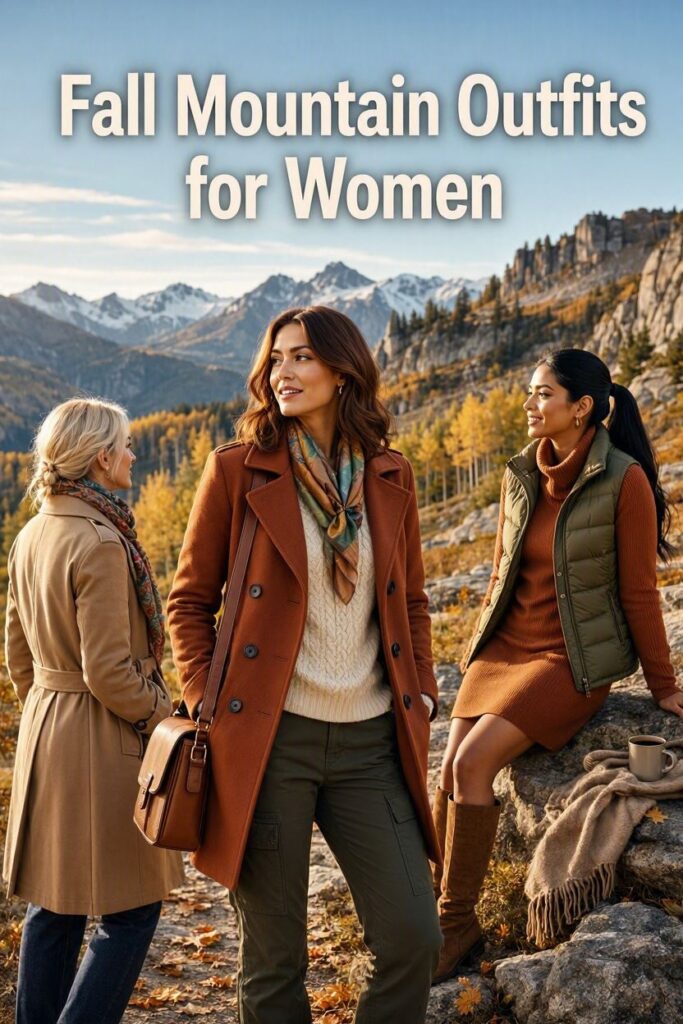
Outfit 9: Earth-Tone Mountain Outfit
Try:
Olive trousers + cream sweater + brown boots + camel jacket
Or:
Dark leggings + charcoal fleece + burgundy vest + black trail shoes
Earth tones blend naturally with mountain surroundings and are easy to mix.
The goal is not to match the landscape perfectly, but these colors are practical and hide minor dirt better than bright white fabrics.
Outfit 10: Layered Skirt Look for Mountain Towns
Try:
Midi skirt + thermal tights + fitted knit + cropped jacket + ankle boots
This is a good compromise between feminine style and fall warmth.
For walking-heavy days, make sure the boots provide enough cushioning.
Advanced Rule: Do Not Overdress Before You Start Moving
One of the most common mountain mistakes is putting on every warm layer before beginning an uphill walk.
Within twenty minutes, overheating becomes a problem.
Start slightly cool rather than heavily bundled.
Keep an extra layer accessible.
This helps prevent excessive sweating, which can later make the body feel colder when activity stops.
Advanced Rule: Your Backpack Is Part of the Outfit System
A backpack changes how clothing performs.
Straps can:
- Cause knitwear to pill
- Trap heat
- Rub against delicate fabrics
- Restrict bulky sleeves
For backpack-heavy days, choose durable fabrics and avoid unnecessary bulk around the shoulders.
Best Fabrics for Fall Mountains
Merino
Good for temperature regulation.
Can be delicate.
Synthetic base layers
Quick drying and durable.
May retain odor more easily.
Fleece
Warm and lightweight.
Can attract lint and may feel bulky under narrow jackets.
Softshell
Useful for wind and movement.
Not always fully waterproof.
Waterproof shell
Best for rain and wind.
Needs breathable layers underneath.
Fall Mountain Outfit Mistakes
Avoid:
- Wearing all warm layers at once
- Choosing smooth-soled shoes
- Wearing jeans for wet hiking
- Carrying delicate fabrics under backpack straps
- Packing only one outer layer
- Forgetting that wind can change comfort dramatically
A Simple Mountain Outfit Decision Table
| Activity | Best Outfit Approach |
|---|---|
| Mountain village | Jeans + knit + jacket + boots |
| Scenic excursion | Trousers + layers + insulated jacket |
| Light walk | Stretch trousers + fleece + trail shoes |
| Hiking | Base + mid-layer + shell + hiking footwear |
| Rainy day | Quick-drying layers + waterproof shell |
Build Your Fall Mountain Outfit in Five Minutes
Use this order:
Step 1: Check the activity.
Step 2: Choose the footwear.
Step 3: Pick the bottom based on terrain and weather.
Step 4: Add a breathable base layer.
Step 5: Add only the amount of insulation needed.
Step 6: Carry the weather layer if conditions may change.
This approach prevents overthinking.
A mountain outfit does not need ten different pieces.
It needs the right five.
Next step: before your next mountain trip, create one outfit for walking, one for sightseeing and one for relaxing. Then identify which pieces can overlap and remove everything else from the packing list.