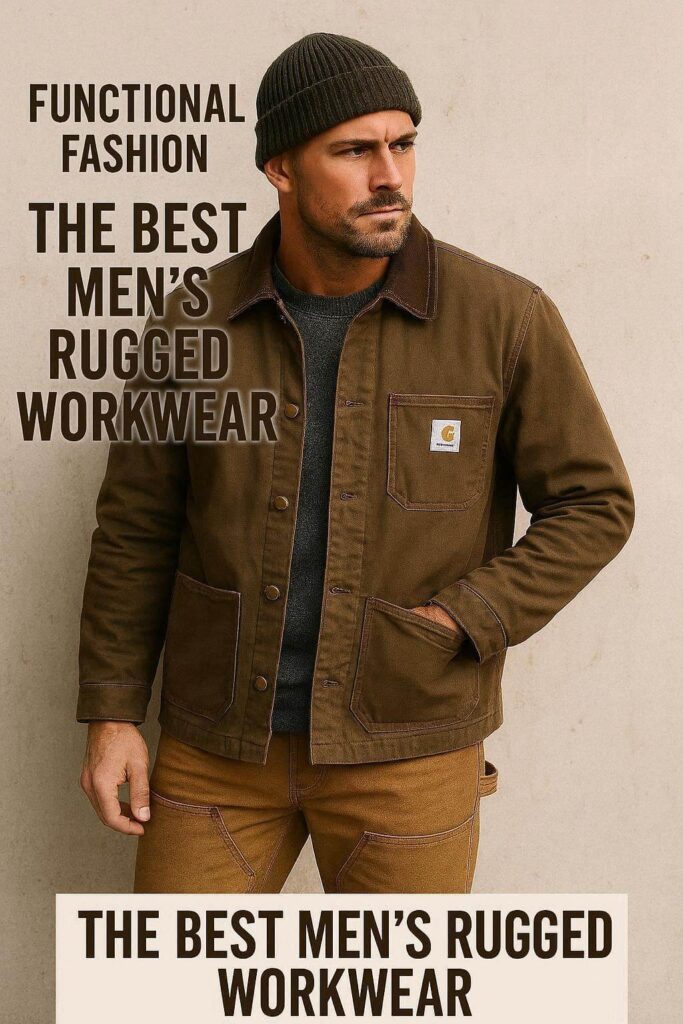
Good workwear has one job before it has a style.
It needs to work.
That means trousers that don’t split when you kneel, jackets that don’t restrict your shoulders, boots that can handle long days and fabrics that don’t become unbearable after a few hours.
The good news is that practical workwear can look seriously good outside the job site too.
The trick is buying for function first and using fit, colour and proportions to keep the outfit from looking sloppy.
What Counts as Rugged Workwear?
Traditional rugged workwear usually relies on durable materials and straightforward construction.
Common choices include:
- Heavy cotton
- Canvas
- Duck cloth
- Denim
- Corduroy
- Wool
- Leather
- Waxed cotton
The important thing isn’t simply that the fabric is thick.
A heavy fabric can be durable but uncomfortable in warm conditions.
A lighter fabric can be more practical for everyday use.
The right choice depends on the work and climate.
The Essential Workwear Pieces
1. Heavy-Duty Work Trousers
Work trousers need enough room for movement.
A slim pair may look sharp but become uncomfortable when bending, climbing or sitting.
Look for:
- Reinforced seams
- Durable pocket construction
- Gusseted areas where appropriate
- Room through the seat and thigh
- A practical rise
- Fabric suited to the climate
A straight or relaxed fit is usually the easiest compromise between movement and appearance.
2. Work Jeans
Heavy denim can be extremely durable, but weight isn’t the only factor.
The weave, fibre blend, stitching and construction all affect performance.
A little stretch can make work jeans much more comfortable, particularly when kneeling or climbing.
Too much stretch, however, can change how the denim holds its shape over time.
For everyday rugged wear, a moderate amount of stretch can be useful.
3. Canvas Jackets
Canvas jackets are excellent transitional layers.
They have enough structure to hold their shape and can handle rougher use than many lightweight fashion jackets.
The downside is stiffness.
New canvas may feel rigid until it breaks in.
That isn’t necessarily a defect. It’s part of the material’s character.
4. Chore Coats
A chore coat offers a cleaner alternative to a heavy work jacket.
The boxy cut provides room for layers, while the multiple pockets are genuinely useful.
Try:
Chore coat + henley + straight denim + leather boots
The result works on weekends as well as for practical outdoor jobs.
5. Flannel Shirts
Flannel is great for layering.
But not every flannel is heavy.
A lightweight brushed cotton flannel can work in mild conditions, while heavyweight versions provide much more warmth.
If you’re wearing the shirt under a jacket, don’t automatically buy the thickest one available. Layering two bulky pieces can restrict movement.
6. Work Boots
This is where comfort matters most.
A rugged boot should provide:
- Adequate toe room
- Secure heel hold
- Support appropriate to the work
- A sole suitable for the surface
- Construction suited to moisture and conditions
The best-looking boot isn’t necessarily the best work boot.
If you’ll spend eight hours standing, walking or climbing, comfort wins.
How to Build a Rugged Workwear Outfit
Start with the job.
Not the Instagram photo.
Step 1: Pick the trousers
Choose denim, canvas or work trousers based on movement and weather.
Step 2: Add the base layer
A cotton tee or henley works in warm conditions.
Step 3: Add the working layer
Use flannel, chore coat or canvas jacket.
Step 4: Choose the boots
Match the boot to the actual ground you’ll be working on.
Step 5: Add accessories only if useful
Leather belt, watch, cap or beanie.
That’s it.
Workwear That Doesn’t Look Too “Work”
This is where proportions help.
Try:
Dark straight-leg jeans + heavyweight white tee + olive chore coat + brown boots
The clothes are rugged, but the clean colour palette keeps the outfit looking deliberate.
Another option:
Canvas trousers + fitted henley + denim jacket + leather boots
The fitted top prevents the heavier trousers and jacket from making the upper body look bulky.
Workwear Colour Combinations
Brown + blue
Classic and easy.
Brown leather boots and blue denim create a natural rugged palette.
Olive + brown
Earthy and practical.
Works particularly well with canvas and leather.
Black + tan
Higher contrast and more urban.
Good for someone who wants rugged workwear without a traditional outdoors look.
Navy + grey
Cleaner and less obviously Western.
Useful when workwear needs to transition into everyday city clothing.
Workwear for Different Weather
Warm weather
Use:
- Lightweight cotton
- Canvas with moderate weight
- Breathable work trousers
- Lightweight shirts
- Ventilated footwear where appropriate
Avoid piling on heavy denim, thick flannel and insulated jackets.
Cool weather
Layer:
Tee + flannel + canvas jacket
The layers can be removed as temperatures change.
Cold weather
Try:
Thermal base + flannel + insulated work jacket + heavy trousers + suitable boots
The key is layering rather than relying on one enormous garment.
Fit: Rugged Doesn’t Mean Baggy
This is one of the biggest style mistakes.
Workwear needs room for movement, but excess fabric can become a safety issue in certain environments and can also make everyday outfits look untidy.
The shoulder seam of a jacket should generally sit in a sensible relationship to the shoulder.
Trousers should allow movement without creating huge folds around the ankle.
The right fit is functional room—not random excess.
Common Workwear Mistakes
Buying the heaviest fabric possible
Heavy doesn’t automatically mean better.
Fix: Match fabric weight to the work and climate.
Ignoring footwear comfort
A beautiful boot is useless if it causes discomfort after an hour.
Wearing too many rugged textures
Heavy denim + thick flannel + canvas + chunky leather can become visually dense.
Fix: Let one or two pieces provide most of the texture.
Choosing fashion workwear for actual labour
Some “workwear-inspired” clothing is designed to look rugged rather than perform rugged tasks.
If the clothing will be exposed to serious abrasion, weather or demanding movement, check the actual construction and specifications.
Ignoring care
Waxed cotton, leather, heavy canvas and raw denim may require specific care.
Don’t wash everything together and hope for the best.
Advanced Workwear Styling Tips
1. Fabric weight should change with temperature.
A heavy canvas jacket makes sense in cold weather but can become miserable in heat. Layering lightweight pieces often provides more flexibility.
2. Use clean lines to offset rugged texture.
A plain tee under a rough canvas jacket creates contrast. A heavily patterned shirt can make the same jacket feel visually cluttered.
3. Trouser hem affects boot appearance.
Too much fabric stacking over work boots creates bulk around the ankle. A cleaner break makes substantial boots look intentional.
4. A slightly fitted top can balance relaxed trousers.
It doesn’t need to be tight. Just reducing excess fabric around the torso gives the lower half room to remain practical.
Rugged Workwear Outfit Formulas
Everyday
Straight jeans + heavyweight tee + canvas jacket + work boots
Western-inspired
Dark denim + pearl-snap shirt + leather belt + cowboy boots + chore coat
Cold-weather
Thermal base + flannel + insulated jacket + heavy denim + boots
Smart rugged
Dark jeans + Oxford shirt + chore coat + leather boots
Weekend
Relaxed canvas trousers + henley + denim jacket + casual boots
Where to Spend and Where to Save
Spend more on pieces that receive constant physical use.
Usually:
- Boots
- Work trousers
- Durable jackets
You can save on:
- Basic T-shirts
- Seasonal colour trends
- Decorative accessories
- Fashion-only layers
A £40 pair of trousers that survives years of regular use may provide better value than a £100 pair that looks great but wears through quickly.
Price isn’t the same as durability.
Construction is what matters.
Quick Comparison
| Workwear Piece | Best For | Main Advantage | Main Drawback | Versatility |
|---|---|---|---|---|
| Heavy denim | Tough everyday wear | Durable | Can be hot/stiff | High |
| Canvas trousers | Practical work | Strong fabric | Can feel rigid | High |
| Chore coat | Work + casual | Useful layering | Less weather protection | Very high |
| Heavy flannel | Cold layering | Warm and comfortable | Can be bulky | High |
| Canvas jacket | Rugged outerwear | Structured and durable | Break-in period | High |
| Work boots | Demanding use | Protection and support | Heavy | Medium |
The Practical Workwear Checklist
Before buying anything, ask:
- Will it allow the movement required?
- Is the fabric suitable for the temperature?
- Are the seams and stress points properly constructed?
- Can it survive the actual work?
- Is it comfortable for several hours?
- Can it be repaired or maintained?
- Does the fit allow layers without becoming huge?
- Can it also be worn casually if versatility matters?
Start with one durable trouser, one reliable boot, one hard-wearing jacket and two simple base layers.
Build from there.
That’s a better workwear wardrobe than buying ten rugged-looking pieces that all do roughly the same job.