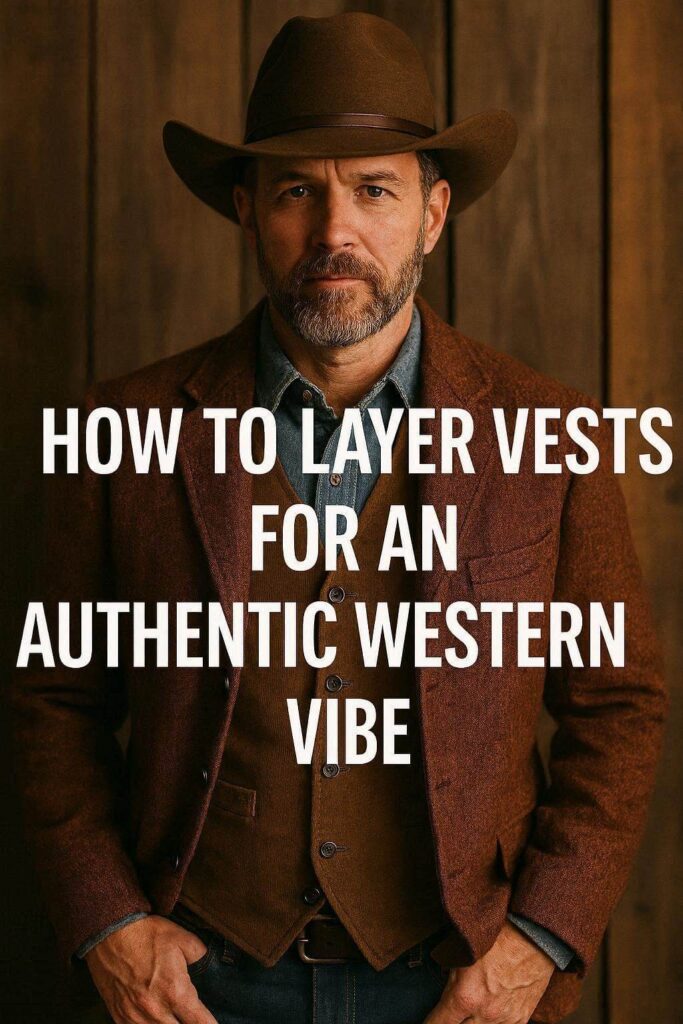
A Western vest can pull an outfit together faster than almost any other piece. Throw one over a plain shirt and suddenly the look has depth, texture, and personality. The catch? A vest that’s too bulky, too fitted, or paired with the wrong layers can make the whole outfit feel stiff or costume-like instead of naturally Western.
The good news is that layering a vest isn’t complicated once a few styling rules click into place. It’s all about balancing proportions, choosing the right fabrics, and knowing when to let the vest be the star of the outfit.
By the end of this guide, you’ll know exactly how to build Western-inspired outfits that look authentic, feel comfortable, and work in everyday life.
Why Western Vests Still Work Today
Western vests have been around for practical reasons long before they became fashion pieces. Ranch workers relied on them for extra warmth without restricting arm movement. That same advantage still makes them useful today.
A good vest:
- Adds warmth without the bulk of a heavy jacket.
- Creates visual structure.
- Breaks up plain outfits with texture.
- Makes layering easier during changing weather.
The biggest mistake is assuming every Western vest works with every outfit. Different materials create very different looks.
Choose the Right Vest First
Quilted Vest
Perfect for casual weekends, road trips and cool mornings.
Works best with:
- Flannel shirts
- Denim shirts
- Henleys
- Straight-leg jeans
Downside:
Many quilted vests use synthetic insulation, which can trap heat surprisingly fast indoors. They’re great outside but can become uncomfortable in heated spaces.
Canvas Work Vest
A rugged canvas vest delivers an authentic ranch-inspired look.
Why it works:
- Extremely durable
- Ages beautifully
- Develops unique fading over time
- Pairs naturally with denim
Things to know:
Heavy canvas feels stiff at first. Expect a break-in period before it softens.
Leather Vest
Leather instantly adds character.
Best for:
- Concerts
- Night outings
- Layering over dark denim
The downside?
Leather requires regular conditioning. Neglect it and dry areas may crack, especially around arm openings where constant movement creates stress.
Wool or Wool-Blend Vest
Ideal during autumn and winter.
Advantages:
- Excellent insulation
- Sophisticated appearance
- Natural texture
Potential drawback:
Lower-quality wool blends may pill where backpack straps or seat belts rub repeatedly.
The Layering Formula That Always Works
Instead of randomly adding clothes, build the outfit in this order.
Step 1: Start with a Simple Base
Choose one:
- Oxford shirt
- Denim shirt
- Chambray shirt
- Henley
- Lightweight knit
- Plaid flannel
Keep the base fairly fitted.
A loose shirt underneath a bulky vest creates unnecessary volume around the waist.
Step 2: Add the Vest
Your vest should skim the body without pulling across the buttons or zipper.
A useful fit check:
Raise both arms.
If the vest rides halfway up your torso, it’s probably too tight.
If the shoulders hang beyond your natural shoulder line, it’s too large.
Step 3: Balance the Bottom Half
The vest shortens the upper body visually.
Balance it with:
- Straight-leg jeans
- Slim straight denim
- Bootcut jeans
- Dark chinos
Avoid extremely skinny jeans with heavy work vests. The proportions can feel top-heavy.
Likewise, oversized cargo trousers combined with thick vests often create too much visual weight.
Step 4: Choose the Right Boots
Footwear finishes the silhouette.
Good choices include:
- Cowboy boots
- Western Chelsea boots
- Leather work boots
- Roper boots
If the jeans stack excessively over shorter boots, the lower half starts looking bulky. Aim for a clean break with just enough stacking to maintain a relaxed Western feel.
Step 5: Finish with Accessories
Keep accessories restrained.
A quality leather belt, simple watch and understated buckle usually outperform oversized statement pieces.
An authentic Western outfit rarely needs every Western accessory at once.
Outfit Formulas That Actually Work
Everyday Casual
- Blue chambray shirt
- Brown canvas vest
- Medium-wash straight jeans
- Leather work boots
- Brown belt
Why it works:
The textures do most of the talking. Nothing competes for attention.
Country Concert
- Black T-shirt
- Black leather vest
- Dark jeans
- Cowboy boots
- Silver belt buckle
The monochrome base lets the leather texture become the focal point instead of looking overly decorative.
Cold Weather
- Plaid flannel
- Wool vest
- Denim jacket
- Dark jeans
- Cowboy boots
Layering works because each piece becomes slightly heavier than the previous one.
Thin shirt.
Medium vest.
Heavy jacket.
The outfit feels intentional rather than bulky.
Smart Casual Western
- White Oxford shirt
- Charcoal wool vest
- Dark jeans
- Chelsea boots
Perfect for dinner, casual office environments or weekend events where cowboy boots might feel slightly too rugged.
Fabric Pairings That Look Better Together
Some combinations naturally complement each other.
| Vest Material | Best Pairing | Why It Works | Watch Out For |
|---|---|---|---|
| Canvas | Denim | Rugged textures balance naturally | Can feel heavy in warm weather |
| Leather | Chambray | Soft fabric contrasts with structured leather | Leather needs conditioning |
| Wool | Oxford cloth | Refined texture contrast | Wool may pill over time |
| Quilted nylon | Flannel | Comfortable and practical | Can become too warm indoors |
Advanced Styling Tips Most People Miss
Let Different Textures Do the Work
Western style isn’t about adding more accessories.
It’s about mixing textures.
Canvas against denim.
Leather beside brushed cotton.
Wool over chambray.
Even similar colours become more interesting when the fabrics change.
Don’t Match Every Leather Item Exactly
Many people buy identical brown boots, belt and vest.
That often looks overly coordinated.
Instead, keep leather tones within the same family.
Dark brown boots can work beautifully with a lighter tan belt and a medium-brown vest because the variation adds depth.
Watch Where the Vest Ends
A vest finishing exactly at the widest part of the hips can unintentionally draw attention there.
Slightly shorter lengths often create a cleaner transition into the jeans.
Longer vests generally suit taller builds, while shorter cuts help keep proportions balanced on shorter frames.
Shirt Collars Matter
Large spread collars tend to disappear beneath thicker vests.
Button-down collars or traditional Western collars usually stay visible, framing the face and making the layering feel sharper.
It’s a small detail that changes the overall appearance more than most people expect.
Common Layering Mistakes
Wearing Every Western Piece Together
Fringe.
Large belt buckle.
Cowboy hat.
Leather vest.
Patterned shirt.
Statement boots.
One outfit doesn’t need all five.
Choose one or two standout pieces and let everything else support them.
Ignoring Fabric Weight
Heavy flannel under a thick wool vest under a heavy jacket becomes uncomfortable surprisingly quickly.
Mix lightweight and heavyweight fabrics instead of piling on thick layers.
Choosing Oversized Everything
Loose shirt.
Loose vest.
Loose jacket.
The result lacks structure.
At least one layer should define the body’s shape.
Forgetting About Movement
Some fitted leather vests feel fine standing still but become restrictive while driving, working or reaching overhead.
Always test movement before deciding a vest fits properly.
Seasonal Adjustments
Spring
Choose:
- Lightweight canvas
- Chambray shirts
- Lighter denim
Summer
If wearing a vest at all, stick to breathable cotton canvas or lightweight denim.
Skip thick wool and insulated quilted styles.
Autumn
This is arguably vest season.
Flannel, denim and leather all layer comfortably without overheating.
Winter
Combine:
- Thermal Henley
- Flannel shirt
- Wool vest
- Heavy denim or canvas jacket
The layered air pockets trap warmth more efficiently than relying on one oversized coat.
Budget vs. Long-Term Value
Not every vest deserves a premium price.
Worth spending more on:
- Full-grain leather
- Heavy canvas
- High-quality wool blends
- Strong stitching
- Durable hardware
Areas where it’s fine to save:
- Trend colours
- Fashion-only quilted vests
- Seasonal statement pieces
A neutral brown or black vest worn twice a week often delivers a much lower cost per wear than an eye-catching colour that leaves the wardrobe after one season.
What to Avoid
- Extremely shiny synthetic fabrics that clash with rugged denim.
- Oversized puffer vests paired with cowboy boots.
- Thin fashion vests that wrinkle after one wash.
- Wearing the vest fully zipped indoors if layering underneath is part of the outfit.
- Mixing too many bold prints. If the shirt features a large plaid or Western pattern, keep the vest solid.
Final Styling Checklist
Before heading out, run through this quick list:
- ✓ Start with a fitted base layer.
- ✓ Choose a vest that matches the weather.
- ✓ Balance the outfit with straight or slim-straight trousers.
- ✓ Mix textures instead of piling on accessories.
- ✓ Keep leather tones coordinated, not identical.
- ✓ Check that the vest allows comfortable movement.
- ✓ Step back and remove one item if the outfit feels overly busy.
The easiest way to build confidence with Western layering is to start simple. Grab a chambray shirt, a brown canvas vest, dark straight-leg jeans and leather boots. Wear that combination a few times, then experiment with different shirts and fabrics. Small adjustments usually create a stronger Western vibe than adding more accessories ever will.