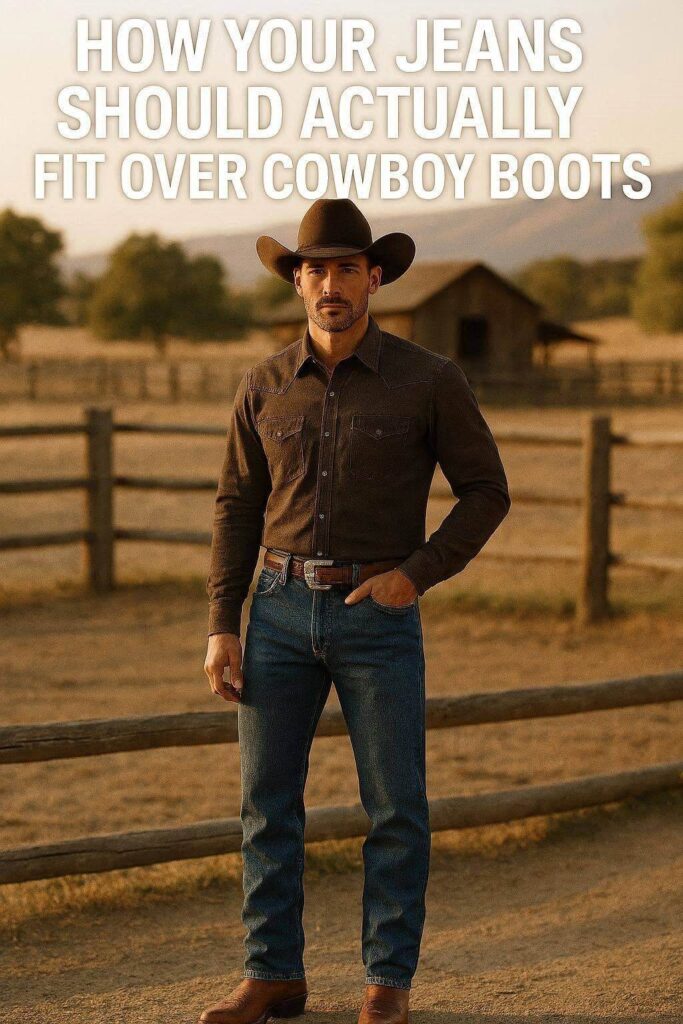
Nothing spoils a great pair of cowboy boots faster than jeans that bunch awkwardly, ride too high, or swallow the boots completely. Plenty of people spend hundreds on quality boots, then throw on the wrong jeans and wonder why the outfit feels off.
The truth is, getting the fit right isn’t about following fashion trends. It’s about balance. Jeans should complement the shape of the boot, move naturally while walking, and still look good after several hours of wear—not just when standing in front of a mirror.
After countless styling sessions and fitting appointments, one thing keeps showing up: most people buy jeans that fit perfectly everywhere except the leg opening. That’s exactly where cowboy boots need extra attention.
Here’s how to get the fit right.
Why Jean Fit Matters More Than the Boots
Cowboy boots naturally change the silhouette of your lower leg.
Unlike sneakers, they have:
- A taller shaft
- A wider opening around the calf
- A pronounced heel
- More structure
That means the jeans have to drape over the boot instead of fighting against it.
When the fit is wrong, several problems appear:
- Constant bunching above the ankle
- Obvious boot outlines (“boot print”)
- Jeans riding up while walking
- Excessive stacking that looks sloppy
- Friction that wears out denim faster
Good jeans simply fall over the boot without drawing attention to themselves.
Ironically, the boots should be the star—not the denim struggling to cover them.
The Golden Rule: Your Jeans Should Break Naturally
One of the biggest misconceptions is that jeans should completely hide cowboy boots.
Not quite.
Instead, they should create a natural break where the denim gently rests over the vamp (the top of the boot).
The result should look relaxed instead of stiff.
Think of it this way:
- Too little break looks too short.
- Too much break looks oversized.
- One clean break creates balance.
This is exactly why experienced Western outfitters spend so much time checking jean length while customers stand—not while sitting.
Step 1: Start With the Correct Rise
Before worrying about the leg opening, get the waist right.
Mid-rise
Usually the easiest option.
It works well because:
- Shirts stay tucked in
- Belt buckles sit naturally
- Movement feels comfortable while riding or walking
High-rise
Great for:
- Traditional Western style
- Longer-looking legs
- Tucking in shirts
Low-rise
Usually creates more problems than benefits.
They often slide down while sitting on horseback or crouching, forcing constant adjustment.
Step 2: Choose the Right Leg Shape
Not every jean cut works over cowboy boots.
Here’s how each performs.
| Jean Fit | Works with Cowboy Boots? | Notes |
|---|---|---|
| Slim Straight | Excellent | Modern without squeezing the boot shaft. |
| Straight Leg | Excellent | Classic Western favourite. |
| Relaxed Straight | Excellent | Comfortable for work and everyday wear. |
| Athletic Straight | Very Good | Gives extra thigh room while maintaining shape. |
| Bootcut | Excellent | Specifically designed to fit over boots. |
| Skinny | Poor | Usually prints the boot shaft underneath. |
| Tapered | Fair | Often narrows too much near the ankle. |
For most people, straight-leg and slim-straight jeans hit the sweet spot.
Step 3: Pay Attention to the Leg Opening
This is where most mistakes happen.
A jean can fit perfectly through the waist and thigh but completely fail at the ankle.
As a general guide:
- 16–17-inch leg opening works for slimmer boots.
- 17–18 inches fits most traditional cowboy boots.
- 18–19 inches works well for work boots with wider shafts.
Anything narrower often grips the boot.
Anything much wider can start looking floppy.
Always test the jeans while wearing the exact boots they’ll be paired with.
Step 4: Check the Stack
Stacking refers to the folds of denim that gather above the boot.
Done well, stacking creates a relaxed Western look.
Done badly, it resembles trousers that were never hemmed.
Minimal Stack
Best for:
- Dressier outfits
- Date nights
- Business casual Western style
Medium Stack
Probably the most versatile.
Works with:
- Ranch wear
- Everyday outfits
- Concerts
- Casual weekends
Heavy Stack
Popular in rodeo circles.
However, it comes with drawbacks.
Extra folds collect dirt, absorb water more easily, and wear through faster around the hem.
Step 5: Test While Walking
Standing still doesn’t tell the full story.
Walk around.
Climb stairs.
Sit down.
Squat.
Watch how the denim moves.
Good jeans stay over the boot naturally.
Poor-fitting jeans ride upward after only a few steps.
Many experienced boot retailers encourage customers to spend five minutes walking around the shop because movement reveals problems that mirrors hide.
Common Fit Mistakes
Jeans That Are Too Long
Extra-long denim seems fashionable in some Western circles.
But there’s a limit.
Too much stacking causes:
- Faster fraying
- Wet hems
- Mud collecting inside folds
- Uneven fading
Jeans That Are Too Short
This is surprisingly common.
When sitting down, several inches of boot shaft become exposed.
That instantly interrupts the clean line of the outfit.
Skinny Jeans Over Traditional Cowboy Boots
This almost never works.
The boot shaft pushes against the denim, creating visible outlines.
Besides looking awkward, the tight pressure increases friction against both leather and denim.
Oversized Bootcut Jeans
More fabric isn’t always better.
Very wide legs can:
- Swing excessively while walking
- Catch on stirrups
- Hide the attractive shape of quality boots
Moderation usually wins.
Two Insider Styling Rules Most Guides Never Mention
1. Denim Weight Changes the Drape
This is something denim specialists notice immediately.
A lightweight 10-ounce denim hangs very differently from a heavyweight 14-ounce denim.
Heavier denim:
- Falls straighter
- Hides the boot shaft better
- Produces cleaner stacking
- Keeps its shape longer throughout the day
Lighter denim feels cooler in summer but often clings to the boot, especially after washing.
That’s why many experienced Western dressers prefer 12.5 to 14-ounce denim during cooler months.
2. The Boot Shaft Width Matters More Than Boot Height
Many shoppers assume taller boots require wider jeans.
Not necessarily.
The shaft circumference is the real factor.
A 13-inch tall boot with a slim shaft may fit comfortably under slim-straight jeans.
Meanwhile, a shorter work boot with an extra-wide shaft can require a relaxed straight fit.
Always judge the width of the shaft—not just its height.
Fabric Choices That Perform Best
Different denim behaves differently over boots.
100% Cotton Denim
Pros
- Holds shape beautifully
- Ages with character
- Develops attractive fades
Cons
- Takes time to break in
- Can feel stiff initially
Stretch Denim
Pros
- Comfortable immediately
- Easier movement
- Great for travel
Cons
- Knees can bag out
- Stretch fibres slowly lose recovery after repeated washing
Too much elastane can eventually make jeans look tired even when they’re relatively new.
Raw Denim
Pros
- Sharp appearance
- Moulds to the wearer
- Long lifespan
Cons
- Stiff for several weeks
- Dye transfer during early wears
- Less forgiving in hot weather
How to Check the Fit at Home
Use this quick fitting routine.
Put Everything On
Wear:
- Cowboy boots
- Belt
- Shirt
- Jeans
Exactly as planned.
Stand Naturally
Don’t pull the jeans down.
Don’t tug the hems.
Let gravity do the work.
Walk for Five Minutes
Notice whether:
- The hem climbs up
- The boot shaft becomes visible
- The fabric twists
Sit in a Chair
Your jeans shouldn’t expose half the boot.
A small rise is perfectly normal.
Look From Every Angle
Use:
- Front mirror
- Side mirror
- Back mirror
Many fitting problems only appear from behind.
Should Jeans Be Tucked Into Cowboy Boots?
Usually, no.
For everyday Western style, jeans belong outside the boots.
The exceptions include:
- Horse riding competitions
- Certain ranch jobs
- Snake protection in rough terrain
- Military or mounted law enforcement uniforms
Outside of those situations, tucking jeans into cowboy boots often looks forced rather than functional.
Quick Comparison Table
| Style Goal | Best Jean Fit | Stack | Denim Weight | Best Boot Type |
|---|---|---|---|---|
| Everyday Casual | Straight Leg | Medium | 12–13 oz | Traditional cowboy boots |
| Smart Casual | Slim Straight | Minimal | 11–12 oz | Dress cowboy boots |
| Ranch Work | Relaxed Straight | Medium | 13–14 oz | Work boots |
| Rodeo Style | Bootcut | Heavy | 14 oz | Wide-shaft rodeo boots |
| Summer Wear | Slim Straight | Light | 10–11 oz | Lightweight leather boots |
The Next Step
Before buying another pair of jeans, put on the cowboy boots they’ll actually be worn with and run through the five-minute fit test: check the rise, confirm the leg opening clears the shaft without printing, walk, sit, and look from every angle. That simple routine catches nearly every fit problem before the tags come off, saving money, reducing returns, and making sure the boots—not awkward denim—get the attention they deserve.