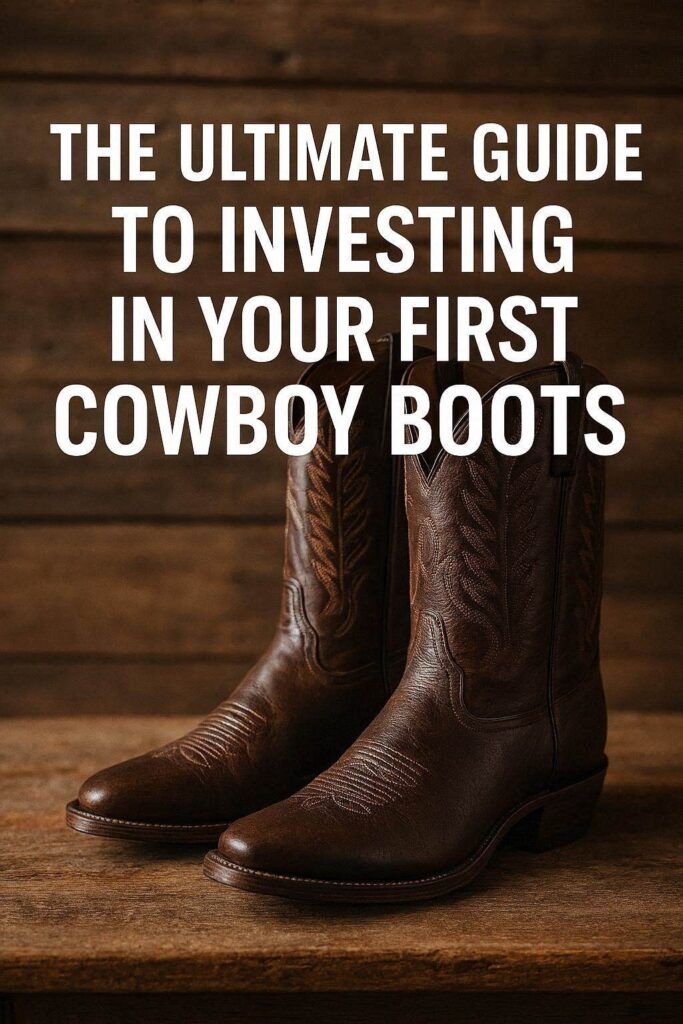
Buying the first pair of cowboy boots feels exciting until the options start piling up. Square toe or round toe? Exotic leather or classic cowhide? Handmade or factory-made? Suddenly, every pair starts looking the same, yet the prices range from under $100 to well over $1,000.
Here’s the thing: expensive doesn’t automatically mean better. Plenty of first-time buyers overspend on boots that pinch their feet, collect dust in the closet, or simply don’t match their wardrobe.
The smartest investment isn’t the most expensive pair. It’s the pair that gets worn several times a week for years.
This guide breaks down exactly how to choose cowboy boots that fit well, age beautifully, and work with everyday outfits—not just rodeo weekends.
Why Cowboy Boots Are Worth Investing In
Unlike sneakers, quality cowboy boots are designed to last for years, sometimes decades, when properly cared for.
Good leather molds to the foot over time. The insole gradually creates a custom footprint, making the boots more comfortable after weeks of wear rather than less comfortable.
That said, there’s an important reality many salespeople leave out.
Not every cowboy boot improves with age.
Cheap leather often cracks around the vamp, synthetic linings trap heat, glued soles separate, and decorative stitching can fray surprisingly quickly.
A quality boot costs more upfront but usually delivers a much lower cost per wear.
How Much Should a Beginner Spend?
Here’s a practical pricing guide.
| Budget | What to Expect | Best For |
|---|---|---|
| Under $150 | Mostly imported, synthetic or lower-grade leather, glued construction | Trying the style without a huge investment |
| $150–$300 | Full-grain leather, decent craftsmanship, comfortable everyday boots | Best value for first-time buyers |
| $300–$600 | Handmade details, premium leather, replaceable soles | Long-term investment |
| $600+ | Exotic hides, custom construction, artisan craftsmanship | Enthusiasts and collectors |
For most people, the sweet spot sits between $200 and $350.
That range usually offers durable leather, quality stitching, and resolable construction without paying extra for exotic materials.
Step 1: Decide How You’ll Actually Wear Them
This sounds obvious, but it’s where many buyers get it wrong.
Before looking at brands, answer one question:
Where will these boots spend most of their time?
Everyday Casual
Look for:
- Medium brown leather
- Square or broad round toe
- Rubber outsole for grip
- Simple stitching
These pair easily with jeans, flannels, henleys, denim jackets, and western shirts.
Smart Casual
Choose:
- Dark brown
- Black cherry
- Smooth leather
- Minimal embroidery
These work surprisingly well with chinos and sport coats.
Ranch or Outdoor Work
Prioritize function.
Look for:
- Oil-tanned leather
- Durable rubber sole
- Waterproof construction
- Reinforced heel
Fancy stitching means very little if the boot spends every day in mud.
Step 2: Pick the Right Leather
Not all leather behaves the same.
Cowhide
The safest first purchase.
Pros:
- Durable
- Affordable
- Easy to maintain
- Breaks in nicely
Cons:
- Can feel stiff for the first few weeks.
Goat Leather
Softer than cowhide.
Advantages:
- Flexible
- Lightweight
- Fast break-in
Downside:
Scuffs more easily than cowhide.
Calfskin
Smooth and refined.
Excellent for dressier outfits.
Downside:
Shows scratches quickly.
Exotic Leathers
Examples include:
- Ostrich
- Lizard
- Python
- Caiman
They look incredible but aren’t ideal for beginners.
Many require specialized conditioners, and some skins dry out faster if neglected.
They’re beautiful investments—but only once basic boot care becomes second nature.
Step 3: Understand Toe Shapes
Toe shape changes the entire personality of the boot.
| Toe Style | Best With | Comfort |
|---|---|---|
| Round Toe | Vintage outfits | Excellent |
| Broad Square | Everyday wear | Excellent |
| Narrow Square | Modern western style | Good |
| Snip Toe | Dressy outfits | Moderate |
| Pointed Toe | Fashion statements | Least forgiving |
Broad square toes dominate today’s casual western wardrobe because they balance comfort with modern styling.
Step 4: Nail the Fit
This matters more than brand names.
A properly fitting cowboy boot should feel different from sneakers.
Here’s what should happen.
The Heel Should Slip Slightly
About ¼ to ½ inch of heel movement is completely normal.
Many beginners mistake this for poor sizing.
After the leather softens, that movement decreases.
The Instep Should Feel Snug
Pulling the boot on should require a gentle tug.
If the foot slides in effortlessly on day one, the boot will probably become too loose later.
Toes Shouldn’t Jam the Front
The widest part of the foot belongs at the widest part of the boot.
If the toes constantly hit the front while walking, size adjustments are needed.
Step 5: Check Construction Before Buying
A quality cowboy boot reveals itself in the details.
Look for:
- Even stitching
- Tight welt
- Clean leather edges
- Symmetrical shafts
- No glue residue
- Smooth interior seams
Flip the boot over.
Uneven stitching underneath often signals rushed manufacturing.
Step 6: Choose a Versatile Color
For the first pair:
Best Choice
Medium brown.
Matches:
- Blue jeans
- Black jeans
- Olive chinos
- Khaki pants
- Dark denim
Second Choice
Dark chocolate.
Slightly dressier.
Excellent with navy and charcoal clothing.
Wait Before Buying
- Bright white
- Bright red
- Turquoise
- Metallic finishes
They’re fun but much harder to wear regularly.
Advanced Styling Rules Most Beginners Never Hear
These are small details that separate an outfit that looks intentional from one that feels slightly off.
Rule 1: Denim Break Matters More Than Boot Brand
A premium boot can still look awkward if the jeans stack excessively around the shaft.
Aim for a gentle single break or a clean stack. Too much fabric bunching hides the boot shape and makes the outfit look sloppy.
Many stylists quietly pin or hem denim for clients after selecting the boots—not the other way around.
Rule 2: Leather Finish Should Match the Outfit’s Texture
This trick comes straight from experienced western stylists.
- Distressed boots pair naturally with heavyweight denim, waxed jackets, canvas chore coats, and flannel.
- Smooth polished leather works better with crisp denim, tailored trousers, suede jackets, or sport coats.
Mixing highly distressed boots with sleek tailored clothing often creates visual tension instead of contrast.
Rule 3: Vegetable-Tanned Leather Ages Differently Than Chrome-Tanned Leather
This rarely gets discussed with first-time buyers.
Vegetable-tanned leather develops a rich patina over time, showing natural darkening and character with wear.
Chrome-tanned leather tends to keep a more consistent color and usually handles moisture better.
Neither is automatically better. The right choice depends on whether a lived-in look or a cleaner appearance is preferred.
Common First-Time Buying Mistakes
Avoid these expensive lessons.
- Buying boots because a celebrity wears them.
- Choosing style over comfort.
- Ignoring width sizing.
- Wearing thin dress socks during fitting.
- Buying exotic leather without understanding maintenance.
- Assuming painful boots will always “break in.”
- Purchasing boots that only match one pair of jeans.
Breaking Them In Without Destroying Your Feet
Forget the old advice about wearing boots all day immediately.
Instead:
- Wear them indoors for 30 minutes.
- Increase to one hour.
- Wear them on short errands.
- Add leather conditioner only if recommended for the leather type.
- Let the boots rest between wears during the first week.
Leather gradually adapts to foot shape.
Trying to rush the process often leads to blisters rather than faster comfort.
Care Tips That Add Years to Your Boots
A little maintenance goes a long way.
- Brush dust off after every few wears.
- Use cedar boot trees to help absorb moisture and maintain shape.
- Condition leather every few months or when it starts looking dry.
- Store boots upright to prevent shaft creasing.
- Keep them away from direct heat after getting wet.
- Replace heel caps before they wear completely through.
One repair shop observation comes up again and again: boots with neglected heel caps often end up needing much more expensive sole repairs later.
Which Features Are Actually Worth Paying For?
| Feature | Worth Paying Extra? | Why |
|---|---|---|
| Full-grain leather | Yes | Better durability and develops attractive character over time |
| Goodyear welt or similar resolable construction | Yes | Soles can be replaced, extending the boot’s life |
| Leather lining | Yes | Improves breathability and long-term comfort |
| Handmade finishing | Usually | Often reflects better attention to detail, though not always necessary |
| Exotic leather | Maybe | Beautiful but higher maintenance and cost |
| Decorative stitching alone | No | Mostly aesthetic, with little effect on performance |
| Fashion branding | No | Adds cost without improving comfort or longevity |
Signs You’ve Found the Right Pair
Before heading to the checkout, run through this checklist:
- ✓ The heel slips slightly but doesn’t lift excessively.
- ✓ The instep feels snug without causing pain.
- ✓ Toes have room to move naturally.
- ✓ The leather feels substantial rather than paper-thin.
- ✓ The color works with at least 70% of the clothes already in the closet.
- ✓ The sole construction allows for future repairs if needed.
- ✓ The boots feel comfortable enough that wearing them next weekend sounds exciting, not intimidating.
Your Next Step
Skip the impulse purchase. Visit a store wearing the jeans and socks that will be used most often, try on at least three different toe shapes, walk around for 10 to 15 minutes in each pair, and compare how each boot fits at the heel, instep, and toe. Take photos in a full-length mirror before deciding. That extra half hour often makes the difference between a pair that’s worn for years and one that stays in the back of the closet.