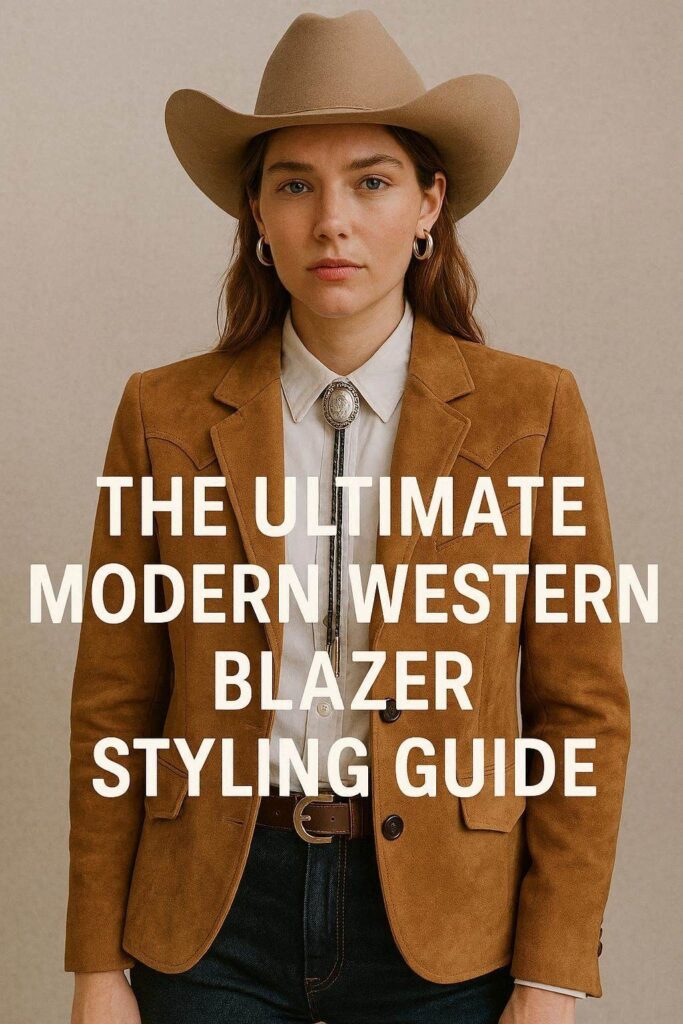
A modern Western blazer sits right between rugged ranch style and polished city dressing. It borrows classic tailoring but adds Western personality through suede, fringe, embroidery, yokes, snap buttons, leather trim, or earthy colors. That balance is exactly why it has become one of the easiest statement pieces to wear today.
The problem? Plenty of people either dress it too formally and lose the Western vibe, or pile on cowboy accessories until the outfit looks more like a costume than everyday fashion.
Getting it right isn’t complicated. It just takes understanding proportions, fabrics, and where to let the blazer do the talking.
What Makes a Blazer “Modern Western”?
A traditional blazer follows clean tailoring. A Western blazer keeps that structure while borrowing details from cowboy heritage.
Common design features include:
- Suede or brushed leather finishes
- Western yokes
- Fringe details
- Contrast stitching
- Embroidered shoulders
- Snap-button closures
- Earth-tone colors
- Leather piping
- Vintage-inspired brass hardware
The modern version tones everything down. Instead of oversized fringe and flashy embroidery, today’s designs focus on cleaner lines with subtle Western accents.
Think “luxury ranch” instead of rodeo costume.
The Four Elements Every Great Western Blazer Outfit Needs
Building a balanced outfit becomes much easier by following this simple formula.
| Element | Best Choice | Avoid |
|---|---|---|
| Blazer | One statement Western detail | Too many decorative elements |
| Shirt | Neutral basics or denim | Loud prints competing with blazer |
| Bottom | Straight-leg jeans or tailored trousers | Extremely distressed denim |
| Footwear | Cowboy boots, Chelsea boots, loafers | Chunky athletic sneakers |
If every piece competes for attention, nothing stands out.
Choosing the Right Western Blazer
Not every Western blazer works for every occasion.
Suede Blazers
Best for:
- Date nights
- Fall outfits
- Country concerts
- Weekend dinners
Downside:
Suede stains surprisingly fast. Even a light drizzle can leave water marks if the leather hasn’t been treated.
Wool Blend Blazers
Best for:
- Office wear
- Business casual
- Winter layering
Downside:
Lower-quality wool blends often pill under backpack straps after only one season.
Cotton Twill Blazers
Best for:
- Spring outfits
- Casual everyday wear
- Travel
Downside:
Wrinkles appear quickly, especially around the elbows.
Leather Western Blazers
Best for:
- Evening outfits
- Fashion-forward looks
- Cold weather
Downside:
Real leather takes time to soften. During the first few wears, movement around the shoulders can feel surprisingly stiff.
Step-by-Step: Build the Perfect Modern Western Outfit
Following the same order every time removes the guesswork.
Step 1: Pick the Blazer First
Everything else supports this piece.
If the blazer has fringe, embroidery, or contrast stitching, keep every other item fairly simple.
If the blazer is minimal, accessories can add more personality.
Step 2: Choose the Right Base Layer
The shirt changes the entire mood.
Great choices include:
- Crisp white Oxford shirt
- Black crew-neck T-shirt
- Chambray button-down
- Lightweight knit polo
- Fine-gauge turtleneck
Avoid heavily patterned shirts.
Plaids can work, but oversized buffalo checks often fight with Western details.
Step 3: Balance the Bottom Half
Slim isn’t always better.
Modern Western style looks strongest with:
- Straight-leg denim
- Relaxed tailored trousers
- Dark indigo jeans
- Cream denim
- Corduroy pants
Very skinny jeans make structured blazers appear top-heavy.
Extremely oversized pants create the opposite problem.
Step 4: Finish With the Right Boots
Boot height matters more than many people realize.
Short Chelsea boots create cleaner proportions with cropped trousers.
Traditional cowboy boots work better with full-length straight-leg jeans.
Boot-cut jeans aren’t required anymore.
In fact, many stylists now prefer straight-leg denim because it creates a cleaner drape over the boot shaft.
Color Combinations That Rarely Fail
Brown Suede Blazer
Works beautifully with:
- White shirt
- Dark denim
- Cream knitwear
- Olive trousers
Black Western Blazer
Looks strongest alongside:
- Grey denim
- Charcoal trousers
- Black boots
- White T-shirt
Olive Blazer
Excellent pairings include:
- Beige chinos
- Medium-wash jeans
- Chocolate boots
- Cream sweater
Camel Blazer
A surprisingly versatile option.
Pair with:
- Black jeans
- Navy trousers
- White shirts
- Light denim
Western Blazer Outfits for Different Occasions
Casual Weekend
- Brown suede blazer
- White crew-neck T-shirt
- Straight-leg jeans
- Brown cowboy boots
Relaxed without looking sloppy.
Office Casual
- Wool Western blazer
- Oxford shirt
- Navy chinos
- Chelsea boots
Subtle Western details keep the outfit professional.
Country Concert
- Fringe blazer
- Black fitted tee
- Dark jeans
- Cowboy boots
- Leather belt
Skip oversized belt buckles unless attending an actual rodeo event.
One statement accessory usually feels more modern.
Dinner Date
- Black Western blazer
- Fine knit polo
- Slim straight trousers
- Leather boots
Simple outfits often look more expensive.
Styling Mistakes Seen Again and Again
These show up constantly during wardrobe consultations.
Wearing Too Many Western Pieces
Cowboy hat.
Western shirt.
Fringe blazer.
Cowboy boots.
Large buckle.
The outfit suddenly becomes themed instead of stylish.
Choose one or two Western statement pieces.
Ignoring Fit
Western blazers should skim the body.
Shoulders should sit cleanly without pulling.
Sleeves should end near the wrist bone.
Oversized tailoring hides the sharp silhouette that makes these jackets appealing.
Mixing Too Many Textures
Suede.
Leather.
Heavy corduroy.
Chunky knit.
Distressed denim.
Each texture adds visual weight.
Keeping two dominant textures usually creates a cleaner look.
Advanced Styling Rules Most Beginners Miss
Rule One: Texture Should Fade Downward
Professional stylists often build Western outfits with the richest texture near the shoulders.
Example:
- Suede blazer
- Smooth cotton shirt
- Clean denim
- Polished leather boots
This creates a natural visual flow.
Reversing that order often makes the outfit feel bottom-heavy.
Rule Two: Watch the Nap Direction on Suede
Here’s something rarely discussed.
Suede has a nap, meaning the tiny fibers lie in one direction. Under natural light, the color can appear lighter or darker depending on how the jacket is brushed. During manufacturing, high-quality blazers keep every panel aligned so the shade looks consistent. Lower-quality versions sometimes have sleeves or pockets cut against the nap, making them look patchy even when they’re brand new.
Checking this detail before buying separates better craftsmanship from average production.
Rule Three: Shoulder Padding Changes the Western Look
Light shoulder padding keeps the silhouette relaxed.
Heavy structured padding creates a corporate appearance that clashes with Western styling.
Many premium Western blazers use soft natural shoulders rather than thick padding.
Rule Four: Denim Weight Matters
Heavy 15-ounce raw denim paired with thick suede can make an outfit feel bulky and restrictive.
A medium-weight denim around 11 to 13 ounces usually hangs better under structured jackets and stays comfortable through a full day of wear.
Accessories That Actually Improve the Outfit
Less usually wins.
Good choices include:
- Leather belt matching the boots
- Silver cuff bracelet
- Turquoise ring
- Felt hat for outdoor events
- Leather crossbody bag
- Minimal watch
Skip oversized necklaces layered over Western shirts.
They tend to clutter the neckline.
Seasonal Styling Guide
Spring
- Cotton Western blazer
- Light denim
- White sneakers or Chelsea boots
- Lightweight knitwear
Summer
Choose breathable cotton or linen-blend Western blazers.
Keep layers minimal.
Dark suede often feels too warm during humid afternoons.
Fall
This is where Western blazers shine.
Layer over:
- Flannel shirts
- Fine knit sweaters
- Dark denim
- Leather boots
Earth tones naturally suit autumn landscapes.
Winter
Layer beneath:
- Wool overcoats
- Long scarves
- Heavy denim
- Leather gloves
Leave enough room in the blazer when trying it on. Thick winter knits can make a perfectly fitted jacket feel tight across the chest and shoulders.
How to Keep a Western Blazer Looking Expensive
Maintenance matters as much as styling.
- Brush suede after each wear to lift the nap and remove surface dust.
- Hang the blazer on a broad wooden hanger to preserve shoulder shape.
- Rotate jackets instead of wearing the same one every day.
- Steam wool lightly rather than pressing it flat, which can leave shiny spots.
- Spot-clean stains quickly instead of rubbing them deeper into the fabric.
- Store leather blazers away from direct sunlight to prevent uneven fading.
- Avoid overstuffing pockets, as this can distort the front panels over time.
A well-cared-for Western blazer often looks better after several seasons because quality materials develop character instead of simply wearing out.
Your Next Step
Pick one Western blazer already hanging in the closet—or try on one while shopping—and build a complete outfit using this framework: statement blazer, simple base layer, balanced straight-leg bottoms, and one complementary accessory. Take a full-length photo, then check for three things: clean proportions, limited competing textures, and just enough Western character to stand out without feeling like a costume. That quick five-minute review catches most styling mistakes before walking out the door.